


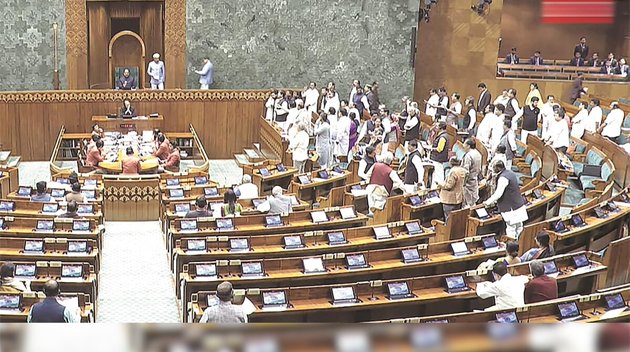
The Congress party is likely to stay away from the joint parliamentary committee (JPC) tasked with examining three controversial Bills aimed at the removal of government functionaries arrested for 30 consecutive days on serious charges. This decision comes as party sources confirmed intentions on Monday, and the official notice will reach Lok Sabha Speaker Om Birla shortly.
Joining Congress in its likely boycott are at least three other opposition parties: Trinamool Congress, Shiv Sena (UBT), and Aam Aadmi Party. The Samajwadi Party has also indicated support for a united opposition movement against participating in the committee. While the stance of some parties remains undecided, none have yet shown interest in joining the committee.
Earlier this month, Speaker Birla stated that no political party has expressed intentions formally regarding a boycott of the JPC. He remarked,
“On the issue of JPC, no political party has communicated to me in writing on this subject,”
during a media briefing, underscoring that the official communication remains pending.
On the last day of the Monsoon Session, Home Minister Amit Shah introduced three contentious Bills in the Lok Sabha, which include:
- The Government of Union Territories (Amendment) Bill
- The Constitution (One Hundred and Thirtieth Amendment) Bill
- The Jammu and Kashmir Reorganisation (Amendment) Bill
This proposed legislation seeks to enable the removal of the Prime Minister, Chief Ministers, and other ministers if they face arrest for a continuous period of 30 days on serious charges. The introduction of these Bills triggered intense opposition protests, with many parties calling the measures unconstitutional and politically motivated, alleging that they primarily target opposition leaders in various states.
As the situation evolves, the JPC has yet to take shape. The House referred the Bills for scrutiny by a joint parliamentary committee comprising 21 members from the Lok Sabha and 10 from the Rajya Sabha. However, as of now, this committee has not been constituted.
Congress’s reluctance to engage with the JPC highlights their broader concerns about government accountability and transparency regarding legislative processes. Political analysts suggest that this boycott could signal growing tensions within the Indian parliamentary landscape, especially as opposition parties unite against perceived overreach from the ruling side.
Looking ahead, if Congress and the opposition do indeed boycot the JPC, this could complicate discussions surrounding these contentious Bills, reinforcing the divide between the government and its critics. The stakes are high as any legislative changes have substantial implications for governance in India moving forward.