


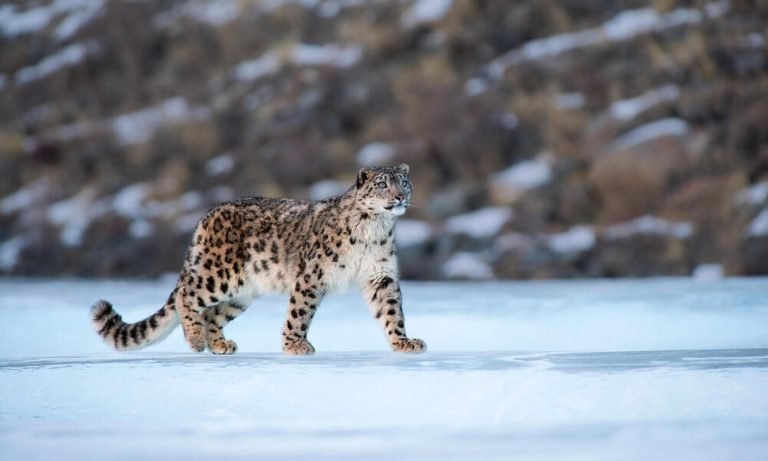
The rare snow leopard population in Himachal Pradesh’s high-altitude tribal regions has surged by 62% in just four years, with the latest count soaring from 51 in 2021 to 83 confirmed individuals. State Forest Department officials announced this significant finding during the opening of Wildlife Week on October 2, underscoring successful conservation strategies that actively engage local communities.
This comprehensive wildlife survey highlights efforts involving local participation, revealing that the latest count surpasses the previous upper confidence estimate of 73 from 2021, suggesting a potential expansion of habitats for these elusive felines. The analysis took place across six diverse sites, covering nearly 26,000 sq km of breathtaking mountainous terrain.
Research teams captured images of snow leopards and their habitats in vital areas such as Lahaul-Spiti, Kinnaur, and Pangi valley. The wildlife survey recorded a remarkable presence of snow leopards not only within designated protected areas like Kibber Wildlife Sanctuary and Great Himalayan National Park but also beyond these regions, indicating a noteworthy habitat extension.
In addition to snow leopards, the survey documented a varied range of prey species including blue sheep, Himalayan ibex, and musk deer. Other mammals, such as Himalayan wolves, brown bears, leopards, red foxes, and martens, were also mapped, painting a vibrant picture of the region’s ecosystem.
The survey presents exciting findings, including the first official sighting of Pallas’s cat in Kinnaur and the remarkable rediscovery of the woolly flying squirrel in Lahaul, further accentuating Himachal Pradesh’s rich biodiversity.
Officials attribute much of the survey’s success to active community involvement. Local youth and women from Kibber village in Spiti played a crucial role in deploying camera traps and analyzing data, while forest officers provided vital support during field operations. The streamlined approach allowed the survey to be completed in just one year, compared to the three years taken for the earlier assessment.
Remarkably, this cost-effective survey establishes a scalable framework for long-term snow leopard monitoring in India. Himachal Pradesh has now become the pioneering state in the country to undertake a second statewide snow leopard assessment, highlighting the effectiveness of local engagement in wildlife conservation.