


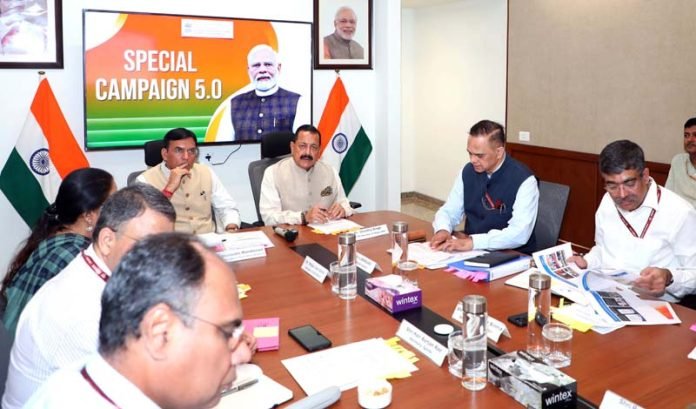
In a significant push towards enhancing cleanliness, Union Minister of State (Independent Charge) for Science & Technology, Dr. Jitendra Singh, has urged ministries to convert the ongoing cleanliness initiatives into a large-scale mass movement. At a high-level review meeting on the implementation of Special Campaign 5.0 on cleanliness, Dr. Singh emphasized the necessity of fostering active public participation, innovation, and private sector engagement in this transformative effort.
Dr. Singh’s remarks come at a pivotal time as India seeks to institutionalize cleanliness within day-to-day governance frameworks. “We should integrate technology, community engagement, and private sector collaboration to ensure that the campaign sustains itself throughout the year,” he asserted, indicating a shift from merely symbolic efforts to impactful action.
The Minister proposed leveraging corporate partnerships and collaborations with MSMEs via NASSCOM to introduce innovative waste management solutions, specifically targeting challenges in urban clusters, hotels, and government establishments. Pointing towards the potential benefits of adopting digital technologies and smart recycling models, Dr. Singh highlighted initiatives like automated waste segregation, which could enhance operational efficiency and provide new livelihood opportunities.
Another critical point raised by Dr. Singh was the need for ministries to share successful practices nationally. He recommended creating a central repository documenting effective cleanliness models—from public spaces to educational institutions. This sharing of best practices, he argued, could foster a collective movement towards cleanliness, with a focus on innovative practices like electronic file disposal, smart waste reuse, and utilizing reclaimed government land for development.
Moreover, Dr. Singh stressed the importance of involving young people and women in the cleanliness campaign. He stated, “When young people and women join the movement, it becomes more vibrant and impactful.” He advocated for amplifying Swachhata messages through schools, colleges, and initiatives by My Bharat volunteers, aiming to cultivate a strong ethos of community responsibility.
Reflecting on past successes of the cleanliness drive, Dr. Jitendra Singh outlined how Special Campaign 5.0 has transitioned from a short-term initiative to a comprehensive governance model aimed at enhancing efficiency, transparency, and citizen-centric services. He reaffirmed the Indian Government’s commitment to maintain this momentum under the guidance of Prime Minister Narendra Modi, noting that innovative best practices from this campaign would be disseminated among States, PSUs, and autonomous bodies.
Additionally, Union Minister of Health and Family Welfare, Dr. Mansukh Mandaviya, speaking during the meeting, highlighted the crucial role of behavioural change and youth engagement in achieving the vision of a “Swachh Bharat.” He proposed the appointment of student and youth ambassadors from various educational institutions to raise awareness and encourage communities in maintaining cleanliness and hygiene.
The meeting included the presence of key officials such as V. Srinivas, Secretary, DARPG; Sarita Chuhan, Joint Secretary, DARPG; and other senior representatives from the Department of Administrative Reforms and Public Grievances (DARPG), the Department of Personnel and Training (DoPT), the Ministry of Health and Family Welfare, among others. The collaborative approach proposed aims at reinforcing community involvement and achieving sustainable cleanliness throughout the nation.