

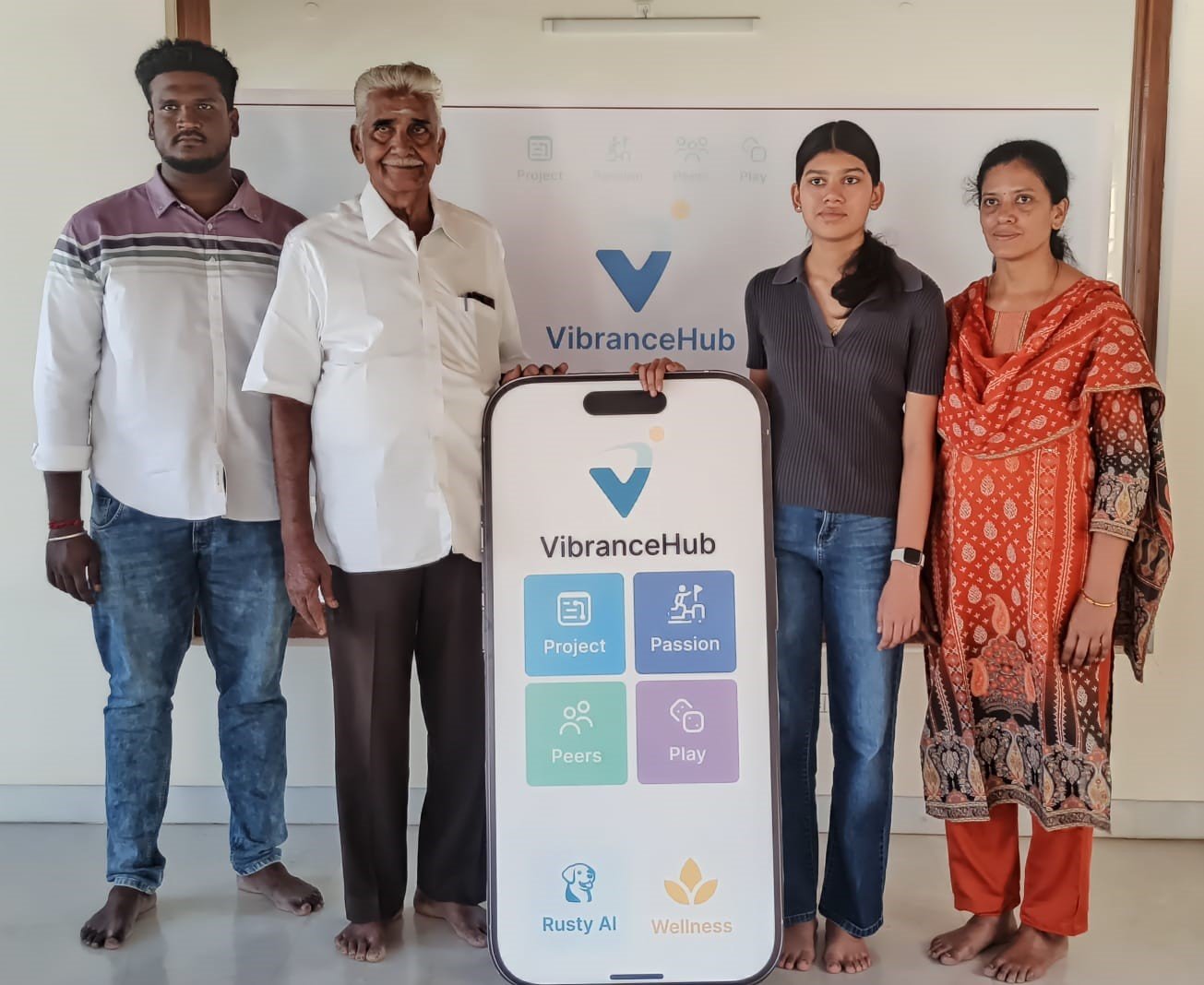
COIMBATORE — Rithanya Sivaram, a Class 12 student at The Indian Public School, has launched Vibrance Hub, an innovative platform that combines project-based learning with peer collaboration and wellbeing support. This initiative aims to fill a significant gap as India prepares its youth for an AI-driven future, where creativity and sustained innovation become essential.
Sivaram recognizes that, “In the age of AI, information is commoditized. What matters now is what you can make, how you think, and whether you can sustain creative work over time.” She emphasizes that while the Atal Tinkering Labs provide students with tools for experimentation, Vibrance Hub adds vital scaffolding, community, and wellness practices to transform mere interest into continuous making and learning.
Rooted in the MIT Lifelong Kindergarten framework—which includes Passion, Projects, Peers, and Play—Vibrance Hub signifies that maker education transcends the mere act of construction. It focuses on nurturing computational thinking, resilience through iteration, and collaboration—the very skills AI cannot emulate.
In essence, Vibrance Hub marks a return to India’s educational roots. Prior to the introduction of a rote-learning system under colonial rule in 1835, India’s gurukul tradition emphasized hands-on, experience-driven learning. Here, students engaged in practical activities like forging to learn metallurgy, observing the skies for astronomy, and practicing medicine through real-world experiences.
The recent National Education Policy (NEP) 2020 aligns with this philosophy, advocating for a resurgence of maker-centric education. The policy emphasizes that India’s future prosperity hinges on nurturing creators and innovators rather than mere information processors.
The Atal Innovation Mission (AIM), initiated in 2016 by NITI Aayog, embodies India’s most ambitious effort to operationalize this maker-centric ideology on a national scale. AIM addresses the NEP 2020’s objectives by enhancing the infrastructure for experiential learning across the country. The mission aims to instill creativity and innovation in young minds, enabling them to contribute meaningfully to society.
“With Vibrance Hub, we connect students with one another, allowing them to collaborate on projects that inspire creativity,” Sivaram explains. Incorporating wellness practices like yoga not only enhances physical health but also fosters mental resilience, vital for sustained innovation.
The launch of Vibrance Hub resonates with many educators who advocate for a shift towards experiential learning methodologies. They believe that such platforms can significantly improve engagement and retention among students, preparing them effectively for challenges in the world of work.
Vibrance Hub represents a significant step toward reimagining education in India. As the country navigates the complexities of the 21st century, initiatives like these will play a crucial role in shaping a future where creativity and analytical skills thrive in an ever-changing landscape.