


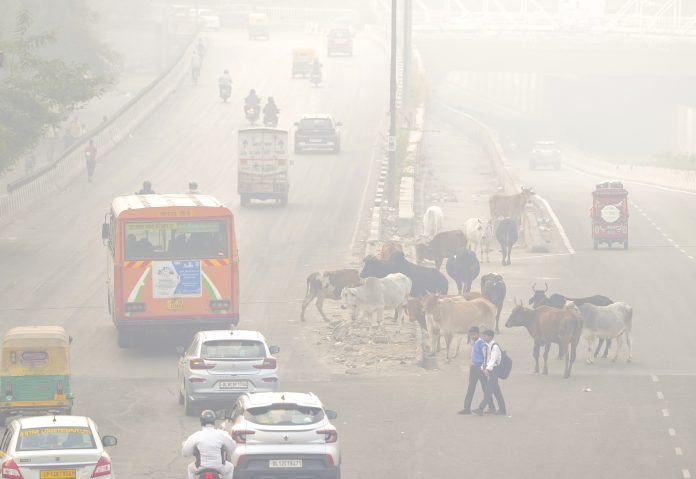
Delhi continues to struggle with severe air pollution as the Air Quality Index (AQI) reached 360 on Saturday morning. The Central Pollution Control Board (CPCB) classifies this level as ‘very poor,’ indicating serious health risks for residents.
According to the CPCB, the AQI categories range from 0-50, deemed good, to 401-500, which is considered severe. With the capital’s overall air quality firmly in the ‘very poor’ category, officials urge vulnerable groups to minimize outdoor activities.
On the same day, Delhi recorded a low of 11.8°C, reported the India Meteorological Department (IMD). The IMD also forecasts persistent fog conditions throughout the day, with a high anticipated around 28.2°C. These meteorological factors contribute significantly to pollution levels and are likely to hinder visibility.
The relative humidity at 8:30 a.m. reached a shocking 100 percent, which compounds the effects of the already toxic air, exacerbating the city’s health crisis. Airborne particulate matter and other pollutants thrive in such humid conditions, intensifying toxicity and health hazards.
City officials emphasize the importance of monitoring air quality. Public health advisories recommend that individuals, particularly those with pre-existing respiratory issues, wear masks when venturing outdoors and consider staying in well-ventilated spaces.
Outdoor events and physical exertion should be limited while the pollution levels remain dangerously high. ***Residents are advised to stay informed*** through daily AQI updates from the CPCB and other reliable sources.
Air quality in various regions of Delhi varies significantly, but the overall trend signals widespread concern. Authorities and environmentalists are urging immediate action to address the root causes of pollution, including vehicular emissions and industrial discharge. Experts advocate for long-term solutions to mitigate these health risks, emphasizing that public transit improvements and stricter emission controls are paramount.
As air quality remains a pressing issue for Delhi, continuous monitoring and public awareness stand crucial. With each passing day, the consequences of poor air quality unfold, reminding residents of the need for sustainable practices to safeguard their health and environment.