


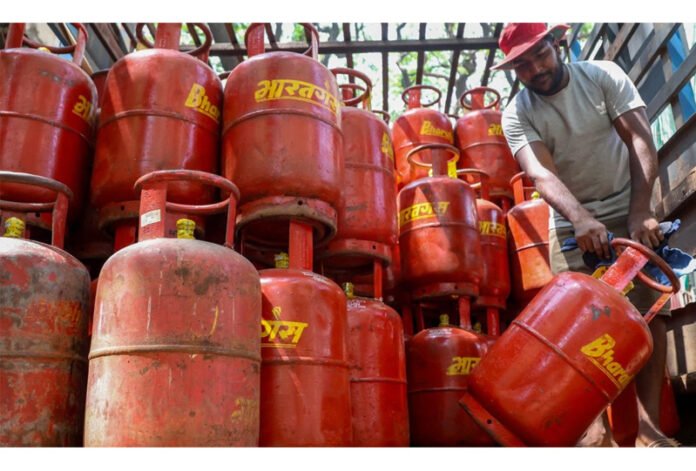
Amid reports of panic buying in several parts of the country, the Government of India on Wednesday assured citizens that there are sufficient stocks of cooking gas to meet household demand, even as authorities move to secure alternative fuel supplies following disruptions caused by the ongoing West Asia conflict.
Officials said the government has intensified efforts to ensure uninterrupted supply of Liquefied Petroleum Gas (LPG) for domestic use, despite challenges arising from disruptions in shipments through the strategically important Strait of Hormuz, a key route for energy imports.
LPG Production Increased
Speaking at a media briefing, Sujata Sharma, Joint Secretary in the Ministry of Petroleum and Natural Gas, said refinery adjustments have increased domestic LPG output by around 25 percent to compensate for reduced imports.
She added that India has also secured two additional cargoes of Liquefied Natural Gas (LNG) from alternative sources to address supply disruptions.
“Feedback suggests that some panic booking and hoarding behaviour has been triggered by misinformation,” Sharma said. “We have enough stocks and there is no need for consumers to rush and book cylinders.”
Impact of Strait of Hormuz Disruption
The widening conflict in the Middle East has severely affected shipping through the Strait of Hormuz, which previously handled the majority of India’s oil, gas and LPG imports.
India imports about 60 percent of its LPG needs, and nearly 90 percent of those imports pass through the Strait of Hormuz. The disruption has therefore forced the country to adjust supply strategies and prioritise essential consumption.
Diversifying Crude Oil Supplies
Officials said India has managed to offset crude oil disruptions by sourcing supplies from alternative markets, including Russia.
According to the ministry, about 70 percent of India’s crude imports are now arriving through routes outside the Strait of Hormuz, compared with roughly 55 percent earlier.
India’s daily crude oil consumption stands at about 5.5 million barrels, with major supplies earlier coming from Middle Eastern countries such as Saudi Arabia, Iraq, and the United Arab Emirates.
All oil refineries across the country are currently operating at full capacity to ensure stable fuel production.
Natural Gas Supplies Partially Affected
India consumes about 189 million standard cubic metres of natural gas per day, of which 97.5 mmscmd is produced domestically and the remainder is imported.
Due to disruptions in shipping routes, approximately 47.4 mmscmd of gas imports have been affected. However, officials said efforts are underway to source gas through alternative routes and suppliers.
Priority for Household Consumers
To manage the supply gap, the government has prioritised household cooking gas needs. Industrial usage of LPG and LNG has been curtailed to ensure uninterrupted supply for over 33 crore households, which account for roughly 86 percent of LPG consumption.
Refineries have been directed to maximise LPG output by cutting petrochemical feedstock streams. Export-oriented plants, including those operated by Reliance Industries, have also been barred from using LPG as feedstock.
For non-domestic LPG supplies, priority is being given to essential sectors such as hospitals and educational institutions.
Measures to Prevent Hoarding
The government has also advised state authorities to take strict action against hoarding and black marketing of cooking gas.
The Union Home Secretary of India recently held a meeting with Chief Secretaries and Directors General of Police from all states and Union Territories to review the supply situation and ensure smooth distribution of essential commodities.
Officials reiterated that the government is closely monitoring developments in the Middle East and coordinating with various ministries and agencies to safeguard India’s energy security and maintain uninterrupted supply of essential fuels.
India, the world’s third-largest crude importer, meets about 88 percent of its oil requirement through imports, with a significant portion traditionally passing through the Strait of Hormuz, one of the world’s most critical energy shipping routes.