


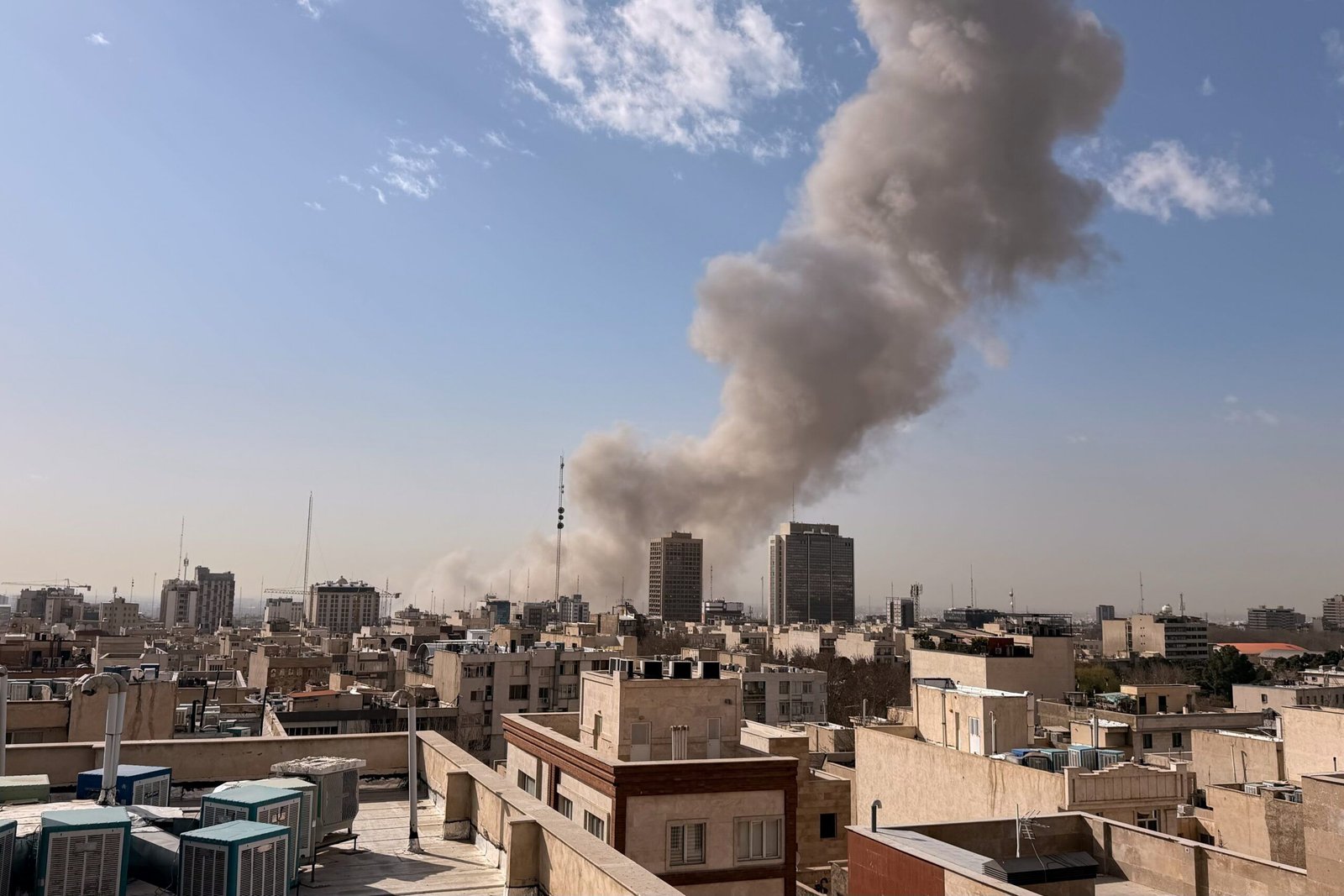
Israel launched a daylight airstrike on Iran’s capital, Tehran, on Saturday, sending a cloud of smoke rising over the city’s downtown area. The first apparent explosion was reported near the offices of Iran’s Supreme Leader, Ali Khamenei.
It was not immediately clear whether the 86-year-old Khamenei was present at the time of the strike. He has not been seen publicly in recent days as tensions between Iran and the United States have escalated.
According to a U.S. official and a person familiar with the operation, Washington is participating in the military action, though the full extent of its involvement remains unclear. Both individuals spoke on condition of anonymity due to the sensitivity of the matter.
The strike comes amid mounting pressure on Iran over its nuclear program. U.S. President Donald Trump has sought a deal to constrain Iran’s nuclear activities, viewing the current period of domestic unrest in Iran — following nationwide protests — as a potential opportunity for leverage. Tehran has insisted on its right to enrich uranium and has resisted negotiations on broader issues, including its long-range missile program and support for regional armed groups.
Israeli Defence Minister Israel Katz described the strike as an operation conducted “to remove threats,” without providing further details.
Witnesses in Tehran reported hearing the initial blast near Khamenei’s office. Iranian state television later confirmed an explosion but did not specify the cause. Additional explosions were reported across the capital after Israel acknowledged launching attacks. No casualty figures have been released.
Simultaneously, sirens sounded across Israel as the country closed its airspace. The Israeli military issued what it described as a “proactive alert” to prepare the public for the possibility of missiles being launched toward Israeli territory.
Iran has previously warned that U.S. military personnel and bases across the region would be considered targets in the event of retaliation. Following the strikes, Iran shut down its airspace and mobile phone services were reportedly cut in parts of the country.
The situation remains fluid, with the potential for further escalation across the region.