


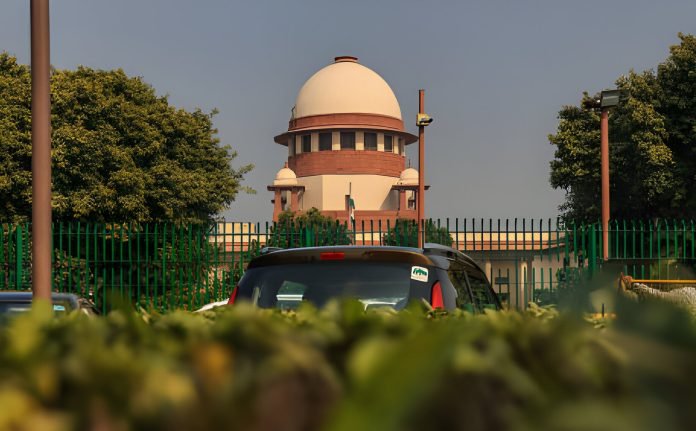
The Supreme Court of India on Wednesday addressed a crucial issue regarding anticipatory bail, referring the question of whether litigants can directly approach High Courts to file such pleas to a three-judge bench. The court also examined the current practices of different High Courts, particularly the Kerala High Court, in handling these applications.
A bench consisting of Justices Vikram Nath and Sandeep Mehta stated that the matter warrants consideration by a larger bench once constituted. “This matter requires to be heard by a three-judge bench,” the court emphasized, highlighting the importance of this legal issue.
In July, the apex court appointed senior advocate Siddharth Luthra as amicus curiae to assist the court in deliberating on the implications of allowing direct anticipatory bail pleas.
On September 8, the Supreme Court raised concerns over the routine practice of the Kerala High Court entertaining anticipatory bail applications directly. The bench questioned, “One issue that is bothering us is that in the Kerala High Court, anticipatory bail applications are regularly entertained directly. Why is that so?” This inquiry underlines potential disparities in the handling of bail applications across different jurisdictions.
The Supreme Court cited provisions from the old Code of Criminal Procedure and the new Bharatiya Nagarik Suraksha Sanhita (BNSS), 2023, asserting a clear hierarchy for the processing of bail applications. Specifically, it referred to Section 482 of the BNSS, which outlines the guidelines for granting bail to individuals fearing arrest.
“It doesn’t happen in any other state. Only in the Kerala High Court do applications for anticipatory bail get entertained directly,” the bench remarked, raising questions about the implications of this unique practice.
The current discourse on anticipatory bail arose from a case involving two accused individuals challenging a Kerala High Court order that had denied them the requested bail. They approached the High Court without first seeking relief from the sessions court, which sparked the Supreme Court’s examination.
The Supreme Court highlighted that allowing direct high court pleas could deprive the legal process of comprehensive factual records that are typically submitted in sessions courts. “We are inclined to consider whether the option to approach the High Court should be a matter of choice for the accused or whether it should be mandatory to first go to the sessions court,” the bench stated.
Furthermore, the apex court issued a notice to the Kerala High Court, through its Registrar General, requesting its response to this pressing issue surrounding anticipatory bail applications. The outcome of this referral could have significant implications for future bail procedures across India.