


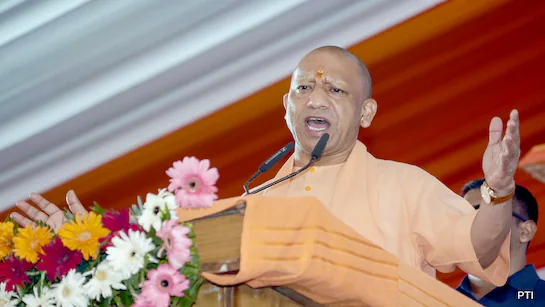
In a recent address in Gorakhpur, Uttar Pradesh Chief Minister Yogi Adityanath underscored that political Islam poses a significant challenge to Hindu society, a fact he believes has been largely neglected in historical analyses. Adityanath discussed the historical struggles faced by leaders like Chhatrapati Shivaji Maharaj and Maharana Pratap against political Islam during an event commemorating the centenary of the Rashtriya Swayamsevak Sangh (RSS).
The Chief Minister’s remarks came during the ‘Vichar-Parivar Kutumb Sneh Milan’ and ‘Deepotsav Se Rashtroutsav’ programmes on Tuesday. He expressed concerns over how discussions about colonialism often overshadow the impacts of political Islam on Sanatan Dharma.
“Our ancestors waged major struggles against political Islam,” Adityanath declared, emphasizing that while battles against British and French colonial powers are frequently mentioned, the ideological threats of political Islam deserve equal attention.
He praised the RSS for its influential role in constructing the Ram temple in Ayodhya, taking a stand for Hindu beliefs amid political opposition. “The Sangh endured restrictions, and its volunteers faced lathi-charge and bullets,” he explained, referencing the resilience shown in the face of adversity.
Adityanath also warned that efforts promoting political Islam persist under different guises, further complicating the societal landscape in India. He stated, “There is talk of British colonialism, there is talk of French colonialism, but nowhere is there talk of political Islam, which undermined the faith.”
His remarks highlight a recurring theme in Indian politics where the ideologies of religious movements are scrutinized, especially when they clash with long-held cultural narratives. “While the nation discusses colonial resistance, it often overlooks this ideological challenge,” he noted.
The Chief Minister’s focus on political Islam aligns with his broader agenda for Uttar Pradesh, where he recently announced a ban on the sale of Halal-certified products, citing concerns about their proceeds fueling conversion, love jihad, and terrorism. This contentious move signifies a sharp turn in policy that he argues is aimed at preserving Hindu values.
Adityanath elaborated on the RSS’s centenary initiatives, introducing five key transformations: social harmony, family values, environmental protection, self-reliance through indigenous goods, and civic responsibility. He characterized these principles as integral to building a ‘Viksit Bharat’ or developed India.
He stated, “For a developed society and a developed nation, society must lead, and the government must follow.” This message resonates with his administration’s ongoing efforts to position Uttar Pradesh as a beacon of development amidst challenges.
As discussions continue regarding the ideological narratives shaping Indian society, the dialogue surrounding political Islam emphasizes the tensions inherent in the nation’s diverse fabric. Adityanath’s remarks invite further exploration into how historical interpretations affect contemporary politics and identity in India.